
Guide
Claude Stein
Guide, Ethos Advocacy Institute
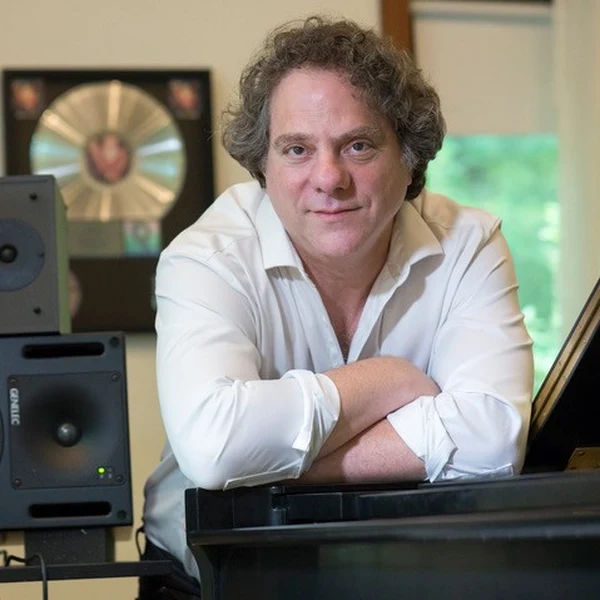
Claude Stein is an internationally celebrated, Multi-Platinum Award-winning voice and performance coach who has spent more than four decades helping people communicate with greater authenticity, emotional power, and persuasive impact. His clients have included Grammy-winning artists, senior executives, political leaders, and some of the nation’s leading trial lawyers. Since its inception in 2017, Claude has served on the faculty of Ethos, working alongside Rick with trial lawyers in programs in Bremerton and with smaller groups around the country.
Claude brings an unusual dimension to the training of trial lawyers: the rigorous vocal and performance skills that allow an advocate’s deepest humanistic values to actually be expressed and felt by jurors.
Visit Claude Stein's WebsiteVoice and Trial Advocacy
Bridging Two Worlds
His work bridges two worlds rarely brought together in trial advocacy. He teaches the concrete mechanics of powerful communication—vocal range, projection, pacing, inflection, breath, diction, gesture, and emotional regulation—while simultaneously helping lawyers connect those skills to authentic intention, empathy, values, and the human truth of the case. His work is designed not to make lawyers more polished or theatrical, but more genuinely themselves: able to speak with natural conviction, listen and respond in the moment, regulate emotion under pressure, and create the trust and human connection upon which meaningful persuasion—and ultimately justice—depend.
Using techniques drawn from decades of coaching both singing and speaking, Claude works experientially rather than intellectually. Singing is used as a tool—not a performance goal—to expand vocal and emotional range, bypass habitual patterns and self-consciousness, and give advocates access to personal and core parts of themselves. The result is greater freedom, presence, resilience, and authenticity in the courtroom—the ability not merely to present a case, but to allow jurors to feel the moral truth behind it.
In Rick Friedman’s Words
Clearing the Obstacles
Rick Friedman describes Claude’s contribution this way:
“Claude Stein sidesteps reason and helps lawyers get to the truth of who they are. Connecting with jurors and judges becomes easier—even fun. He clears the obstacles, allowing the voice of a powerful advocate to be heard.”
Music, Leadership, and Teaching
Beyond the Courtroom
Outside the legal world, Claude has coached artists on every major record label and received Gold and Platinum awards for his work with Grammy-winning artists. His singing and voice programs have been presented at The Juilliard School, as well as at leading retreat centers in the United States and abroad. A prolific and published songwriter, pianist, and singer, Claude remains an active performer himself and can regularly be found singing at Monday-night open mics in Woodstock, New York.
Claude’s leadership and communication programs have been presented at NASA, General Electric, Siemens, JPMorgan, Accenture, Johnson & Johnson, MIT Sloan School of Management, the Center for Creative Leadership, and the United States Congress, among many others. His workshops have been offered in 13 countries, teaching thousands of people to communicate with greater authenticity, power, and confidence.
Claude has served on the faculty of Massachusetts General Hospital Leadership Academy, Mobius Executive Leadership, the Center for Professional Excellence, Omega Institute, Esalen Institute, and Kripalu Center for Yoga & Health. He has been a main-stage keynote speaker for the National Speakers Association, the Center for Creative Leadership, and the International Coaching Federation.
Pro Bono Work
Voice, Music, and Healing
Claude has also devoted a significant part of his career to pro bono work, using voice, music, and breathwork to foster healing, connection, and human expression. His Coherent Breathing recordings for reducing trauma and symptoms of PTSD are offered by 400 teachers in 130 countries from Ukraine to Rwanda and South Sudan. At NYU, his work with the Music Therapy program explored applications of voice and music for people affected by autism and dementia. In Australia, he worked with a school serving young people from Aboriginal communities who had experienced abuse. Through The Mastery Foundation in Belfast, he brought his work to programs bridging the divide between Protestants and Catholics, as well as Palestinians and Israelis, using voice and music to help people connect across profound cultural, religious, and political divides.
Across music, leadership, and the courtroom, the purpose of Claude’s work remains the same: to develop the skills that allow people to stop performing a version of themselves and communicate from the depths of who they are—so that their voice carries not only information, but passion, credibility, and authenticity.