
President & Core Guide
Leigh E. Johnson
President, Ethos Advocacy Institute · Trial Lawyer · Trial Consultant · Author · Psychodramatist
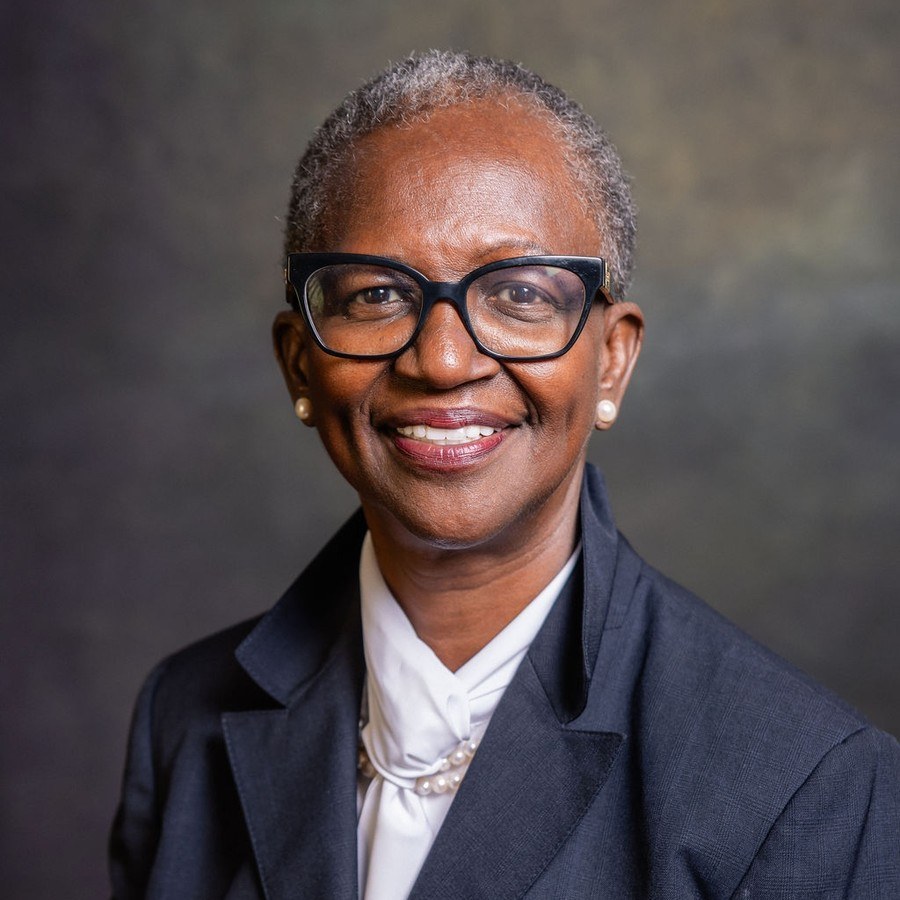
Leigh E. Johnson is a trial lawyer, trial consultant, psychodramatist, and educator whose career has crossed remarkably different areas of law, science, storytelling, and human behavior. She has practiced law since 2003, with experience spanning patent law, family law, criminal defense, capital cases, and plaintiff civil litigation. That breadth has given her an unusual vantage point from which to explore the question that has come to define much of her work: how do human beings understand, organize, and tell stories when the facts are fixed and the stakes are high?
Before the Courtroom
Entering the Law Through Science
Leigh entered the legal profession through patent law. With a bachelor’s degree in biological sciences and years of experience working in biotechnology, she became registered to practice before the United States Patent and Trademark Office in 2002. Her scientific background taught her to understand complex technical information, identify the relationships among seemingly disconnected facts, and translate complexity into something another person could understand.
An Unusually Varied Practice
The Human Dimensions of a Case
Her legal career soon expanded well beyond patent law. Leigh practiced family law, represented people accused of crimes, worked on capital cases, and handled plaintiff civil matters. Across these very different areas of practice, she became increasingly interested in the human dimensions of a case: not simply what happened, but why people behaved as they did, how relationships and pressure shaped their choices, and how jurors ultimately made meaning from the stories presented to them.
Law Focus Groups · Trial Whisperer
Jury Research and Trial Consulting
That interest led Leigh into jury research and trial consulting. She founded Law Focus Groups and Trial Whisperer and spent years conducting focus groups and consulting with lawyers in civil and criminal cases. Her work has included case development, jury research and selection, storytelling, witness preparation, trial strategy, and helping lawyers identify vulnerabilities in cases they had become too close to see.
Years of listening to focus-group participants profoundly influenced her understanding of advocacy. Leigh came to recognize that the purpose of jury research was not simply to predict what a jury might do.
It was to discover how other human beings organize the case.
Jurors could hear the same evidence lawyers had studied for months and construct an entirely different story from it. Understanding those differences became central to her work.
Trial Lawyers College, 2010–2025
More Than Two Decades of Teaching
Leigh has also spent more than two decades teaching trial lawyers. She served on the faculty of the Trial Lawyers College from 2010 to 2025 and has taught lawyers across the country in trial advocacy, jury selection, case development, storytelling, psychodrama, and experiential methods. Her teaching is grounded in the belief that advocacy cannot be separated from the advocate and that some of the most important things lawyers need to learn cannot be mastered through lecture alone.
Trainer, Educator, Practitioner
Psychodrama, Sociometry, and Role Theory
Her work eventually brought together trial advocacy, storytelling, psychodrama, sociometry, role theory, and the study of human behavior. Leigh is a Trainer, Educator and Practitioner (TEP) in Psychodrama, Sociometry and Group Psychotherapy, the highest level of certification in the field. She uses psychodrama and other action methods to help lawyers move beyond analyzing people and cases from the outside and encounter their roles, relationships, pressures, systems, and competing perspectives from within.
A Signature Ethos Methodology
Building the Case
Leigh is the author of Building The Case: Storytelling When Facts Are Fixed and Stakes Are High. The book integrates decades of legal practice, jury research, trial consulting, storytelling, psychodrama, and teaching into a methodology for developing legal stories when the underlying facts cannot be changed. At the center of the work is the recognition that human behavior cannot be understood in isolation. People act within roles, relationships, pressures, environments, and systems, and those forces help give the facts their meaning.
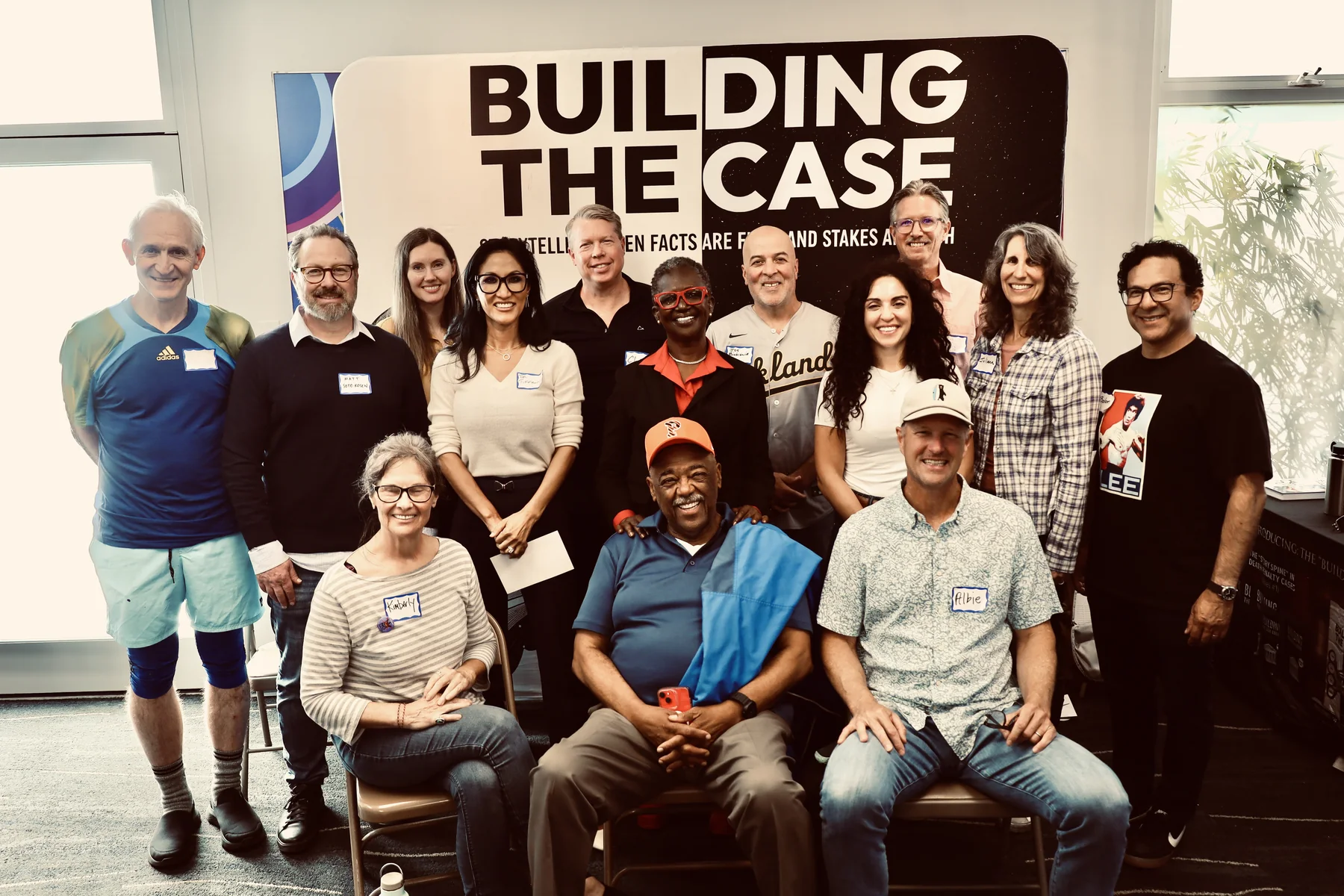
Story is identity under pressure.
An Unconventional Path
Before the Law
Leigh’s path to this work has been anything but conventional. Before becoming a lawyer, she served in the United States Air Force in combat telecommunications, worked as an air traffic controller, and spent years working in the biotechnology industry. Each demanded a different kind of expertise, but all required the ability to understand complex systems, make consequential decisions under pressure, and communicate clearly when the stakes mattered.
Leigh and Ethos
A Relationship Reaching Back to the Beginning
Leigh’s relationship with Ethos reaches back to its earliest years.
She first attended Ethos at its second program in Bremerton, Washington, where she experienced firsthand the unconventional approach Rick Friedman and the other guides were developing. She returned to the third Ethos program as a guide herself, beginning a relationship with the Institute that has continued as both Ethos and her own work have evolved.
The connection was natural. Ethos was asking many of the same questions that had come to animate Leigh’s work in trial advocacy, jury research, storytelling, and psychodrama.
- What happens to lawyers under pressure?
- How does the person of the lawyer enter the advocacy?
- Why can we intellectually understand something and still be unable to do it when the moment arrives?
- How can experiential methods reveal what analysis alone leaves hidden?
- And how do we help accomplished lawyers continue developing not simply greater knowledge, but greater range?
President, Ethos Advocacy Institute
Leading the Next Chapter
Today, as President of Ethos Advocacy Institute, Leigh is helping lead the organization into its next chapter. Her work includes expanding Ethos into new locations, broadening the subjects and disciplines explored in its programs, developing Foundations, Advanced, and Specialty offerings, and preserving the experimental spirit that has distinguished Ethos from conventional legal education since its creation.
She brings to that work the perspective of a lawyer who has practiced across dramatically different areas of law, a trial consultant who has spent years listening to how ordinary people understand legal cases, a TEP who trains others in experiential methods, an author and storyteller, and an educator who has spent more than two decades working with trial lawyers.
Those paths now converge at Ethos. The question is no longer simply how to teach lawyers better techniques.
It is how to develop advocates with the skill, humanity, integrity, resilience, and freedom to use what they know when it matters most.
Leigh first came to Ethos as a participant in its earliest years.
Today, she is helping carry the experiment forward.