
Our Founder
Richard H. “Rick” Friedman
Founder, Ethos Advocacy Institute
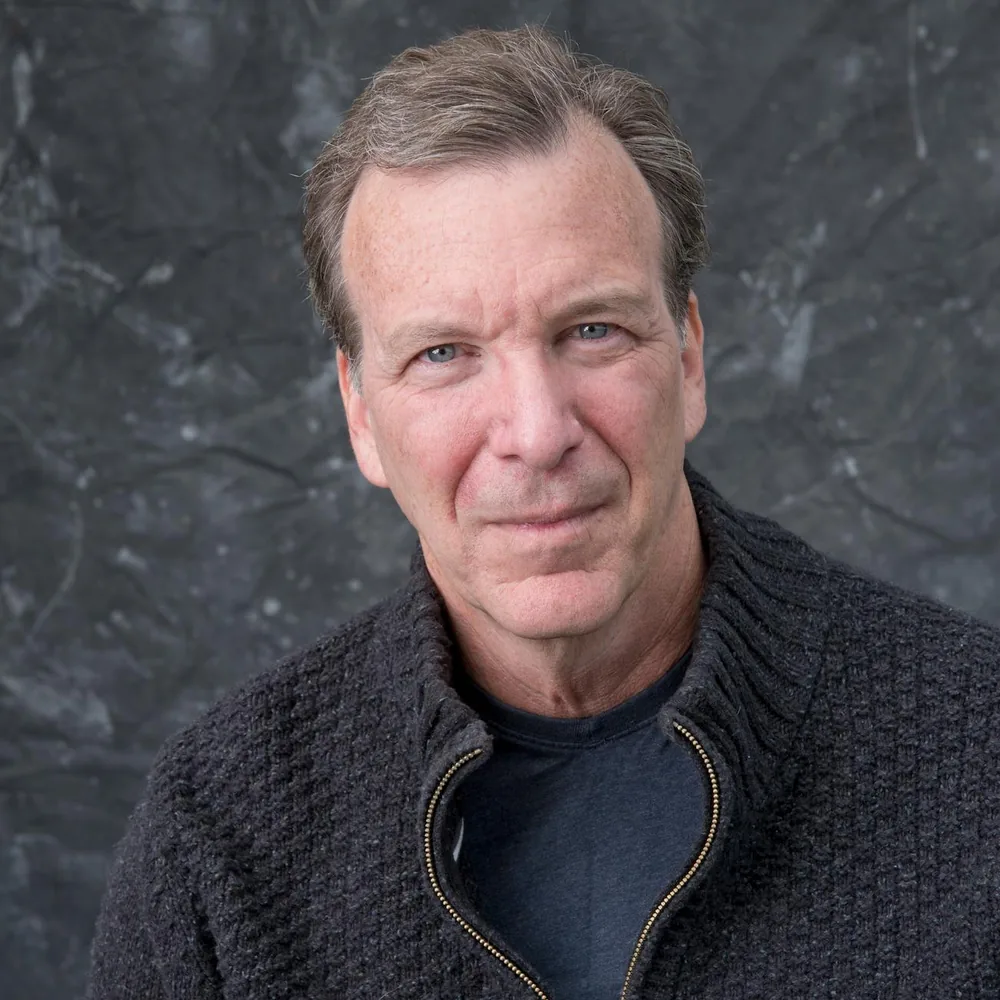
Richard H. “Rick” Friedman is a nationally recognized trial lawyer, author, teacher, and founder of the Ethos Advocacy Institute. A graduate of Harvard Law School, Rick began his legal career in Alaska, where his first jury trial was an unlikely beginning for a lawyer who would eventually become known for some of the largest plaintiff verdicts in the country: he prosecuted a man for illegally snagging a fish. Rick went on to build a national trial practice representing individuals against powerful corporations and institutions.
Over the course of his career, Rick has tried cases involving catastrophic injury, insurance bad faith, medical negligence, defective products, environmental exposure, and other complex claims. Six of his verdicts have been ranked among the ten largest verdicts in the United States in the years in which they were returned.
Writer · Teacher
Who Must the Lawyer Become?
Rick has also had a substantial influence on the way trial lawyers think about their craft. His body of work includes five books on trial advocacy: Rules of the Road: A Plaintiff Lawyer’s Guide to Proving Liability, with Patrick Malone; Polarizing the Case: Exposing and Defeating the Malingering Myth; The Elements of Trial, with Bill Cummings; Becoming a Trial Lawyer: A Guide for the Lifelong Advocate; and The Way of the Trial Lawyer: Beyond Technique.
Taken together, those books reveal an evolution in Rick’s thinking about what it means to be a trial lawyer. His work moved beyond how to prove a case and defeat an opponent toward a more difficult inquiry: who must the lawyer become to do this work well?
Rick is a past president of the Inner Circle of Advocates and has spent decades teaching trial lawyers throughout the country. His work as a teacher increasingly convinced him that traditional legal education was leaving something important out. Lawyers were being taught law, strategy, technique, and performance, but comparatively little attention was being given to the character and emotional makeup of the lawyer who had to use those skills when the stakes were high.
That continuing inquiry across an advocate’s professional life is the focus of Ethos Advanced.
That realization eventually led to Ethos.
2017
The Experiment That Became Ethos
In 2017, Rick invited 40 plaintiff lawyers to participate in an unusual experiment. He had watched lawyers—including himself—struggle with stress, fear of losing, decisions about when to settle and when to try a case, financial pressures, preparation, courtroom confidence, difficult judges and opposing counsel, and the challenge of balancing the lawyer’s interests with the interests of the client.
He described these struggles as “wrestling with our demons.”
His premise was that when lawyers do not deal effectively with those forces, the forces consume energy that could otherwise be devoted to their clients, their cases, and their lives.
Rick did not know whether the experiment would work. He said so plainly in his original invitation.
It worked.
The participants wanted another program, and the Ethos Advocacy Institute was created as a nonprofit to continue the experiment. Over the years that followed, Rick and his fellow guides continued developing experiential and unconventional methods designed to help lawyers become not only better trial lawyers, but happier and more satisfied advocates and human beings.
Then, at almost exactly the same time Ethos was beginning, Rick entered one of the most demanding chapters of his own trial career.
2016–2026
The Monsanto Years
Rick began working on the Monsanto litigation in 2016.
The cases arose from PCB exposure at the Sky Valley Education Center in Washington and involved students, teachers, parents, and others associated with the school. What followed was nearly a decade of extraordinarily complex litigation against one of the world’s largest corporations.
The cases required extensive scientific and medical evidence, numerous experts, difficult questions of exposure and causation, and enormous financial resources. Rick has estimated that each trial cost approximately $1 million, largely because of the expert-intensive nature of the litigation.
And these were not short trials. Each lasted approximately two to two-and-a-half months.
Ultimately, Rick describes the litigation as involving 10 trials—or 11, depending upon whether the final case, which settled after closing arguments, is counted. When it became clear that Monsanto was not going to settle the remaining claims after the first several verdicts, Rick and his firm could not possibly try all of the cases themselves. Other plaintiff lawyers and firms were brought into the effort, allowing the plaintiffs to maintain a strategy of trying approximately three or four cases each year.
The first trial, brought on behalf of three teachers, resulted in a verdict of approximately $185 million.
The next produced approximately $60 million.
And the trials continued.
Rick estimates that approximately 50 to 60 clients were ultimately taken to trial and roughly 40 prevailed, while other claims resulted in defense verdicts or hung juries. He is careful to describe those client numbers as recollections rather than exact figures.
The total verdicts are harder to forget.
The Sky Valley Litigation
Approximately $1.3 Billion in Jury Verdicts
Across the Monsanto litigation, Rick estimates that the plaintiff verdicts totaled approximately:
$1.3 billion.
The number is extraordinary. So is what was required to reach it.
The cases were tried repeatedly over years. Monsanto changed lawyers and trial teams. Rick and his colleagues faced victories, losses, hung juries, appeals, enormous litigation expenses, and the physical and emotional demands of preparing and trying cases that consumed months at a time.
Rick has spoken candidly about the financial pressure. When asked whether he lost sleep over the tremendous financial risk involved in funding the litigation, his answer was simple: he did.
The litigation also taught another lesson that fits naturally within the Ethos philosophy: the importance of collaboration. Rick has observed that plaintiff lawyers can undermine themselves when they become unwilling to share cases or fees. Faced with the impossibility of maintaining the necessary trial schedule alone, his team did the opposite. They brought other lawyers into the litigation, shared the work, and supported other firms trying related cases.
The trials were followed by years of appellate proceedings. Eventually, the cases reached what Rick has publicly described as a “very good ending.” The final case settled after closing arguments, and the remaining cases on appeal were subsequently resolved. The settlement amounts are confidential.
By 2026, the chapter that had begun a decade earlier was finally coming to an end.
What He Carried Back
Returning to Ethos
The timing matters.
The questions that led Rick to create Ethos were not questions he left behind while he spent years trying the Monsanto cases.
He lived them.
- How much preparation is enough?
- How do you manage the fear of losing when enormous resources are at risk?
- How do you recover from a loss and prepare to enter another courtroom?
- How do you sustain yourself through months of trial and years of litigation?
- How do you collaborate when the work becomes larger than any one lawyer or firm?
- How do you make sound judgments when the financial, professional, and human stakes are enormous?
- How do you remain authentic under pressure?
- And how do you prevent the demands of being a trial lawyer from consuming the human being doing the work?
Those questions have been at the heart of Ethos from its beginning.
With the Monsanto litigation concluded, Rick is returning more of his attention to the experiment he began in 2017 and to the next chapter of the Ethos Advocacy Institute.
The premise remains both simple and radical:
The lawyer cannot be separated from the advocacy.
Becoming an exceptional advocate requires more than learning exceptional trial techniques. It requires developing the human being who must use them.
After decades in the courtroom—and most recently, nearly a decade spent repeatedly trying some of the most difficult cases of his career—Rick continues to write, teach, experiment, and explore how lawyers can become more skillful, resilient, courageous, grounded, and satisfied advocates.
The experiment continues.
In His Own Words
Hear Rick Tell the Story Himself
In February 2026, Rick joined trial lawyer Charla Aldous on the More Likely Than Not podcast for a wide-ranging conversation about his unlikely first jury trial, his books, his development as a trial lawyer, the Monsanto litigation, the billion-dollar series of verdicts, the risks involved, and what he has learned over a lifetime in the courtroom.